Power that keeps changing
Glasses needing frequent, larger changes, with a lot of cylinder (astigmatism) that keeps shifting.
Keratoconus makes the cornea thin and bulge, so vision blurs and keeps changing. Caught early, corneal cross-linking (C3R) can halt it, and lenses fitted to your eye bring clear sight back. We detect it, measure it, treat it, and watch it over time.
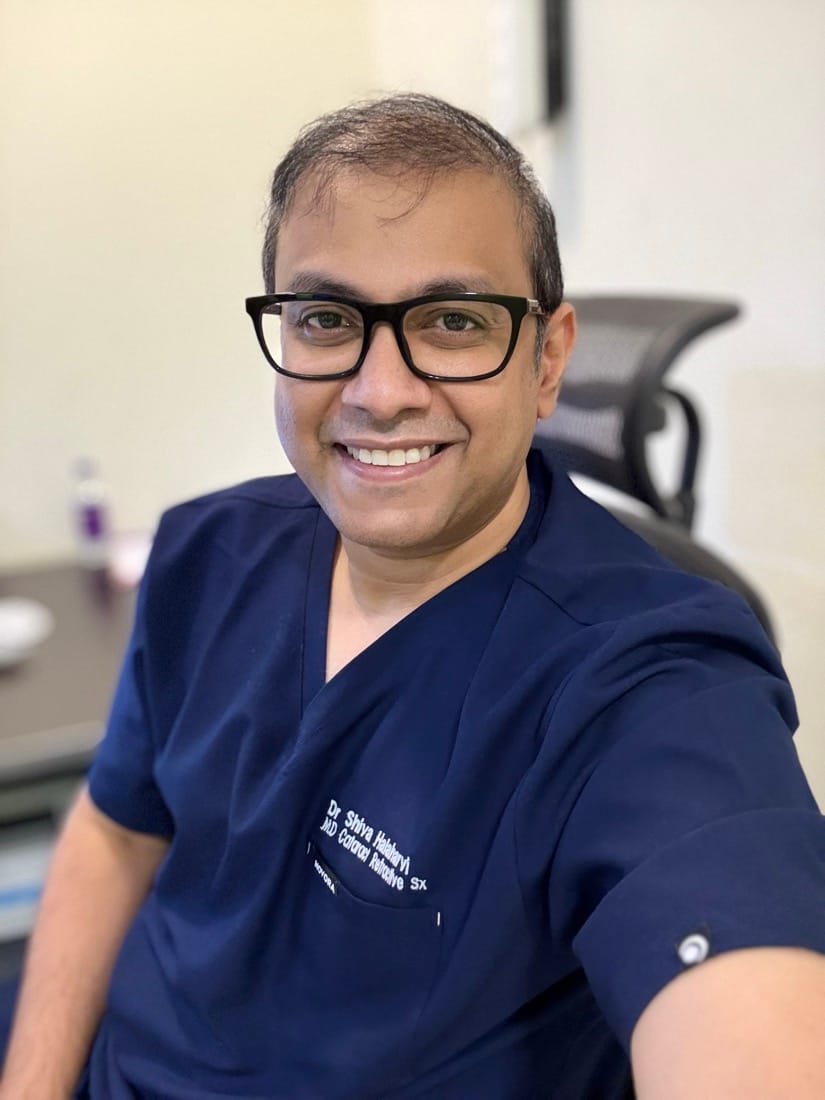
Normally the cornea is a smooth dome. In keratoconus it thins and bulges into an irregular cone, so light no longer focuses cleanly and vision blurs, ghosts, and keeps changing. It often runs in families and is made worse by eye rubbing. Dr. H. Siva Mohan Reddy oversees every plan personally.
These are reasons to get your cornea mapped, especially in the teens and twenties, or if it runs in your family. The earlier it is found, the more vision cross-linking can protect.
Keratoconus is something we focus on. The four steps below are one connected programme, not separate visits, and the same surgeon stays with you throughout.
There is no single "keratoconus lens", the right one is whichever sits comfortably and gives you the sharpest vision on your own eye. About a month after C3R, once the cornea has settled, our lens specialists trial the options and prescribe what suits you. We fit all four.
At many busy centres, one person consults you, another operates, and a third sees you afterwards. Here, the same senior surgeon stays with you through your keratoconus care, and every visit after.
Your sight is not where to bargain-hunt. Ask these of any practice you are considering:
At Dr. P. Siva Reddy Eye Hospital, the answer to every one of these is yes.
Third generation of a family Hyderabad has trusted with its eyes since 1975, founded by Padma Bhushan Dr. P. Siva Reddy, "the People's Ophthalmologist."
The bulge that has already formed in the cornea cannot be reversed, and we will always be honest about that. What can be done is just as important: corneal cross-linking (C3R) can stop it getting worse, and specialty contact lenses give clear vision again. Caught early and treated, most people keep good, usable sight and never reach the stage of needing a transplant.
It is the treatment that halts keratoconus. We apply riboflavin (vitamin B2) drops to the cornea and activate them with a controlled UV light. This strengthens the natural collagen bonds in the cornea, stiffening it so it stops bulging further. It is a stabilising treatment, it holds the cornea steady; it is not, on its own, a way to sharpen vision, which is what lenses are for.
Most people who are caught early and cross-linked do not. We do not perform corneal transplants here, so if a cornea is too advanced and a graft is genuinely the right step, we will tell you honestly and refer you to a corneal specialist we trust. Our aim is to catch keratoconus before it ever reaches that point.
In the early stages glasses may still give reasonable vision. As the cornea becomes more irregular, glasses can no longer focus it cleanly, and that is where specialty contact lenses come in. We fit all four keratoconus lens types, rigid gas-permeable (RGP), scleral, hybrid, and custom soft, and our specialists can fit any of them. About a month after cross-linking, we trial the options on your eye and prescribe whichever gives you the clearest, most comfortable vision.
It usually begins in the teens or twenties and can keep changing into the thirties. Frequent eye rubbing, allergies, and a family history all raise the risk. Early detection matters most here, because cross-linking protects the most vision when it is done before the cornea has bulged too far.
Yes. Vigorous eye rubbing is strongly linked to keratoconus progressing, often driven by allergy. Part of caring for your eyes is helping you stop the rubbing and treating any allergy behind it, alongside the cross-linking itself.
It depends on what your eyes actually need, the scans, whether cross-linking is required, and which lenses suit you, all of which the doctor explains clearly at your assessment. The honest way to understand it is to come in for that visit, once your cornea has been measured. You are warmly welcome in Himayat Nagar; book on WhatsApp or by phone.
Book on WhatsApp or by phone. Bring any previous eye reports, corneal scans, glasses, and contact lenses you have, so we can see how your cornea has changed over time.
Medically reviewed by Dr. H. Siva Mohan Reddy · 2026-06-25
The fastest way to reach us is WhatsApp. We typically respond the same day.